

Practical exterior-cleaning answers from Eric Grooms, owner of Upper Cumberland Pressure Washing. These answers combine Eric’s firsthand experience on Upper Cumberland jobs with surface-specific guidance. Read how we inspect properties, choose cleaning methods, explain prices, and set realistic expectations.
Pressure washing and soft washing
- What Is the Difference Between Pressure Washing and Soft Washing? — How the surface, condition, contaminant, and manufacturer instructions determine the method.
- How Often Should You Have Your House Washed in Tennessee? — A practical inspection schedule based on shade, moisture, pollen, siding, and visible buildup.
- How Should You Prepare Your Home for Exterior Washing? — A practical checklist for access, windows, pets, fragile items, landscaping, and existing damage.
Concrete and roof cleaning
- Can Pressure Washing Damage Concrete? — Why condition, nozzle choice, distance, and technique matter.
- What Causes Black Streaks on Asphalt Shingle Roofs? — Common causes, manufacturer cautions, and why asphalt shingles should not be pressure washed.
- Can Pressure Washing Remove Rust Stains? — Why pressure alone is often insufficient and how surface, source, condition, and test results shape treatment.
Gutters and exterior maintenance
- Interior Gutter Cleanout vs. Exterior Gutter Soft Washing — How interior debris removal differs from exterior soft washing, and why the scope is confirmed before work begins.
From Eric’s jobs: a Cookeville house, fence, and pool surround
Based on Eric’s firsthand account, September 12, 2026.
The customer wanted the house washed, both sides of the fence cleaned, and the concrete around the pool cleaned. There were several years of algae buildup. We used our house-wash mix on the house and fence, then traditional pressure washing on the suitable concrete.
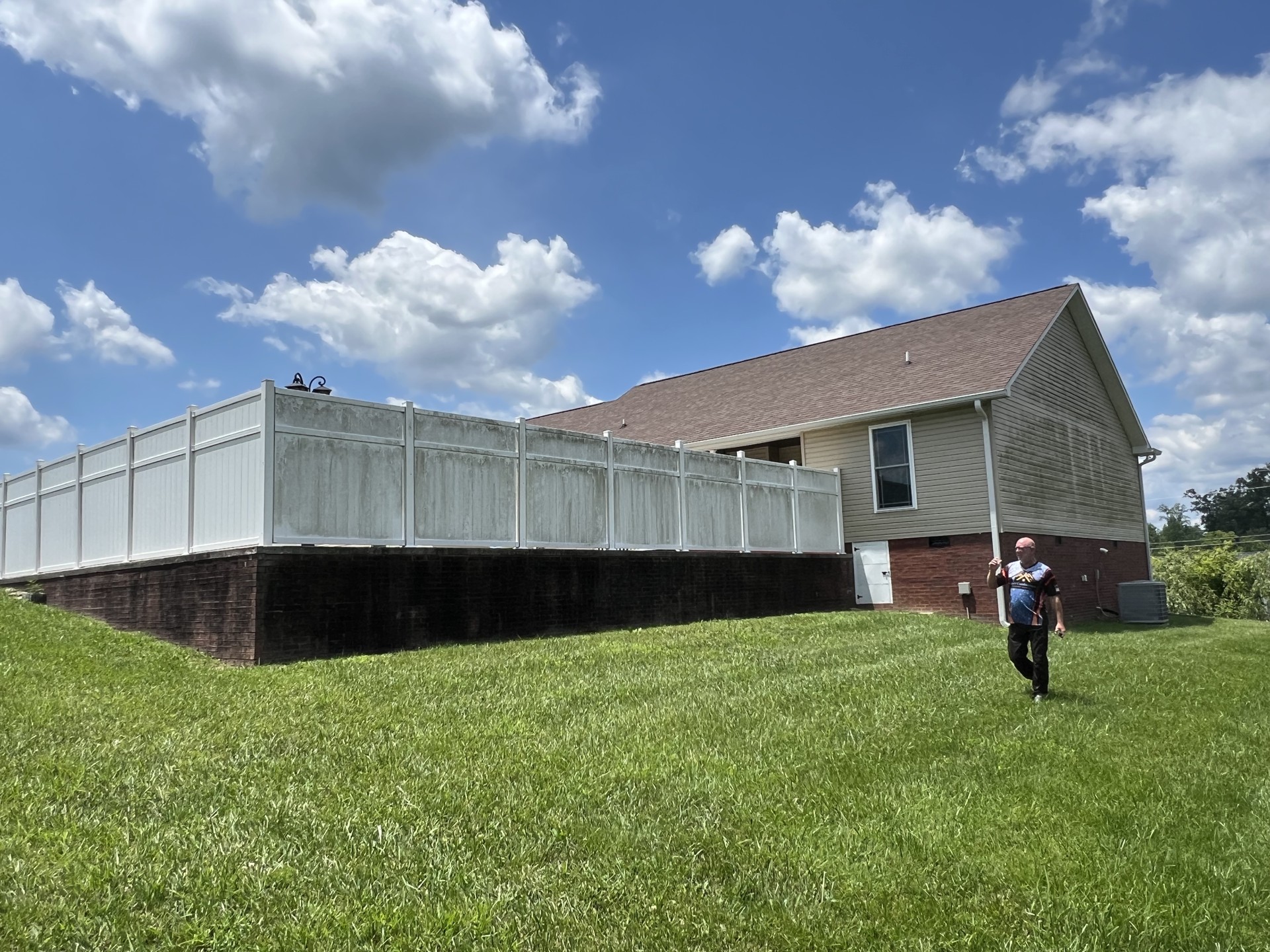
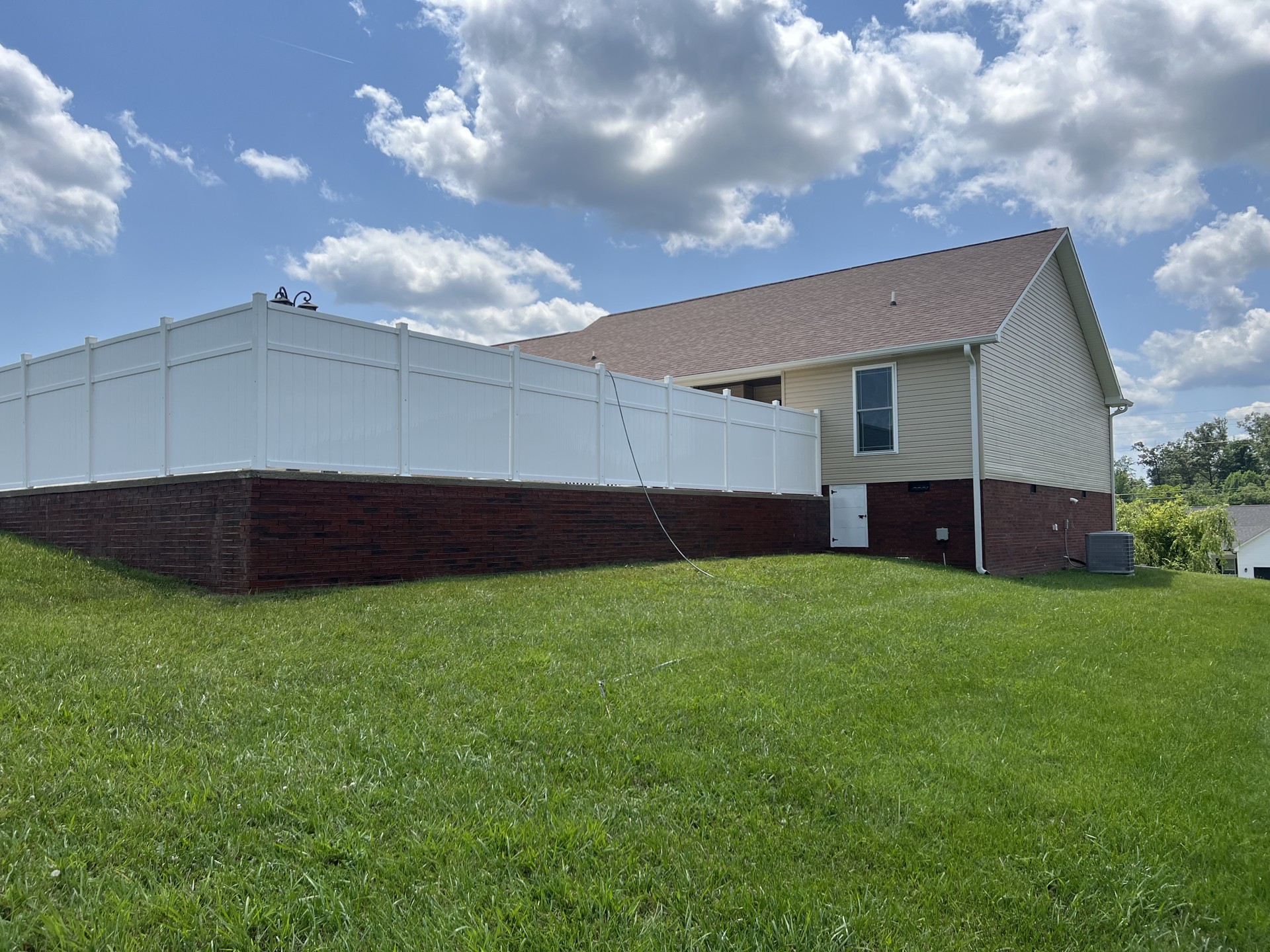
The retaining wall needed particular care. Too much pressure could move the blocks, so we kept the cleaning method gentle there. Around the pool, we worked from the inside outward to reduce splashing and direct water away. We explained before starting that we could not keep every drop of solution out of the pool and advised the customer to monitor her pool chemistry. That is a description of this job, not confirmation that pool water was tested or ready for swimming.
We used plant-protection measures, covered outlets, and kept high pressure away from the closed windows. Our final rinse and walkaround checked for missed areas and dirty-water drips. Eric recalls that the customer was astonished by the improvement and referred us to her neighbor, whose home we subsequently cleaned. This is Eric’s recollection, not a verbatim customer review.
See the Cookeville service page for the photo comparison and local service information.
Eric answers: decks, fences, and composite decking
For a fuller explanation of the material checks and cleaning methods, read Can I Pressure Wash My Deck Without Damaging It?
What do you inspect before cleaning wood?
We walk the deck or fence and look for soft spots, loose boards, weathering, and peeling paint or stain. Rotten or spongy wood needs repair; washing will not fix it. We clean sound bare wood carefully with lower pressure. Sound painted or stained finishes get a gentle approach, while failing coatings may peel further during washing. Cleaning is not refinishing.
Have you ever postponed a deck wash for repairs?
Yes. A deck looked dirty from the yard, but boards near the stairs felt soft and old stain was peeling in sheets. We showed the customer the problem and recommended replacing the affected boards before cleaning. They held the wash, fixed the boards, and called us back. On our return, we cleaned the deck gently and rinsed thoroughly. We told them to wait until the wood was fully dry before restaining, following the stain manufacturer’s directions. A few sunny days may be needed; the same afternoon is not our default recommendation, and weather and product requirements determine the timing.
Do you offer staining?
Our regular service is deck and fence cleaning and preparation. We do not advertise staining as a routine service. A customer may ask about it, and we decide case by case whether the job and timing work.
How do you clean composite decking?
We check the brand or type when known, surface growth, scratches, and wear. We choose a mild, suitable cleaner and gentle pressure rather than treating composite like old lumber. If uncertain, we test a small area and assess the result before continuing. The product manufacturer’s care instructions guide the method.
Will washing fix burns, scratches, or faded boards?
No. We have seen composite with deep grill burns, faded walking paths, and scratches that cleaning could not erase. We point those out before starting: dirt and mildew may come off, but burns, gouges, and worn color remain. That distinction helps customers recognize existing damage rather than thinking a mark was missed.
Eric answers: what affects the price?
Our house-wash pricing generally starts with square footage. Work height, severe growth requiring repeated treatment, and large porches with extensive railings can add work and cost. Exposed aggregate takes longer to rinse than smooth concrete. Limited water supply may require an extra water trailer, typically at an additional charge arranged beforehand.
A small rust stain can still require specialty products and experienced handling. When it is extra to the main job, we explain the separate price and obtain the customer’s approval before treatment. Oil and rust results are assessed individually; older stains may leave a shadow even after substantial improvement.
Read our rust-stain answers, concrete-cleaning answers, and appointment preparation guide for details.
Need advice for your property?
Browse our exterior-cleaning services, review the frequently asked questions, or request a free estimate.